
Main Courses
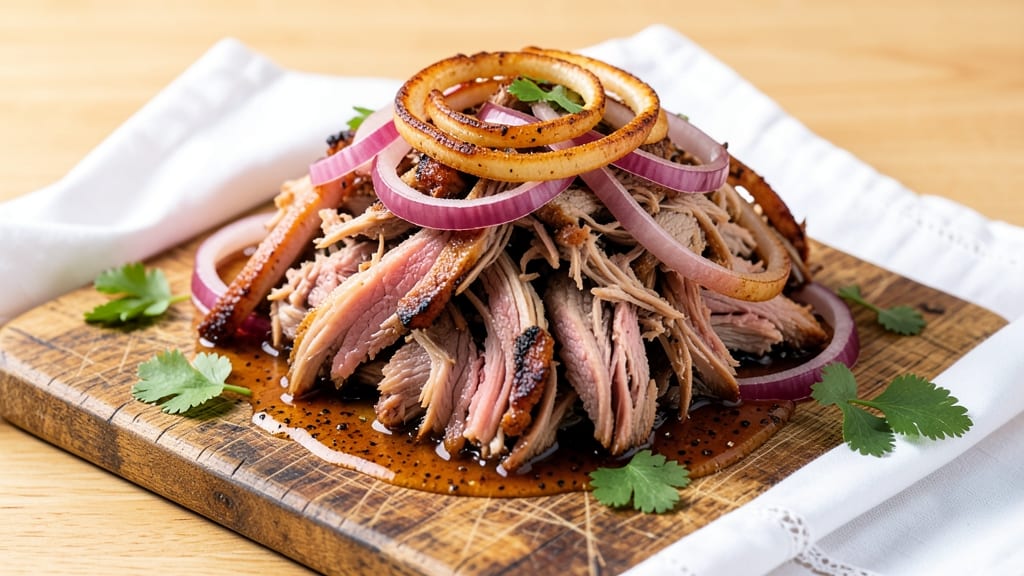
This American pulled pork recipe delivers tender, smoky-sweet shreds that rival your favorite BBQ joint—ready in just 4 hours using a proven slow-cooking method. 🔥 Growing up in Georgia, I learned that the secret lies in low-and-slow cooking, where tough pork shoulder transforms into melt-in-your-mouth perfection.
The key? A perfect balance of bark formation and moisture retention, achieved through a simple rub and careful temperature control.
What sets this recipe apart is the authentic approach: no shortcuts, no rushed techniques. We'll use a 6–8 hour cook time at 225–250°F, allowing the collagen to break down while developing that signature smoky flavor.
The bark forms naturally from the rub, creating a flavorful crust that seals in all the juices. This method ensures every bite is tender, juicy, and packed with that unmistakable BBQ taste.
By the time you're done, you'll have perfectly shredded pork that falls apart at the touch of a fork, ready to be piled high on buns with tangy coleslaw or served as a hearty main dish.
The beauty of this recipe is its versatility—whether you're feeding a crowd for a backyard gathering or meal prepping for the week, the results are consistently restaurant-quality.
Serve it with classic sides like cornbread, pickles, and a crisp slaw to complete the Southern BBQ experience. The slow-cooked method means leftovers reheat beautifully, making this the ultimate dish for busy weeks. Let's get started on creating pulled pork that'll have everyone asking for seconds.
Ingredients for american pulled pork
Six ingredients for the rub, plus juicy extras to turn tough pork into melt-in-your-mouth perfection.
| Ingredient | Amount | Notes |
|---|---|---|
| Pork Shoulder (Boston Butt) 🥩 | 5 lb | Bone-in, well-marbled cut preferred |
| Yellow Onion 🧅 | 1 whole | Large, yellow variety |
| Garlic Cloves 🧄 | 8 cloves | Fresh, peeled |
| Brown Sugar 🍯 | ½ cup | Packed, light brown preferred |
| Smoked Paprika 🌶️ | 2 tbsp | High-quality, not sweet |
| Ground Black Pepper 🌶️ | 1 tbsp | Freshly cracked preferred |
| Kosher Salt 🧂 | 2 tbsp | Diamond Crystal preferred |
| Dried Thyme 🌿 | 1 tbsp | Or 1 tbsp fresh thyme leaves |
| Apple Cider Vinegar 🍎 | ¼ cup | For tangy depth |
| Beef Broth 🍲 | 1 cup | Low-sodium preferred |
| Honey 🍯 | ¼ cup | Wildflower preferred |
| Unsalted Butter 🧈 | ½ cup | Cold, cubed for basting |
| Fresh Rosemary 🌿 | ¼ cup | Chopped, stems removed |
| Baking Soda 🧪 | ½ tsp | For tenderizing |
The pork shoulder makes or breaks this—look for a well-marbled 5-pound Boston butt at Costco or your butcher shop. That fat is what keeps it juicy. If buying pre-cut, check for even thickness (about 1.5–2 inches). Trader Joe's often carries great cuts, but call ahead. For the rub, smoked paprika from Penzeys adds that signature BBQ depth, while the brown sugar caramelizes beautifully during cooking. Fresh thyme? Worth it, but dried works in a pinch—just use half the amount. The apple cider vinegar is non-negotiable for that tangy kick that balances the sweetness.
No smoked paprika? Substitute 1 tbsp regular paprika + 1 tsp liquid smoke—just don’t overdo the smoke. Out of beef broth? Chicken broth works, but add 1 tsp soy sauce for depth. Honey substitute? Maple syrup in equal amounts, though it’s less sweet. The baking soda tenderizer is optional but game-changing—skip it if you prefer a more traditional approach. For the butter, European-style (like Plugrá) melts better, but any unsalted works. Pro tip: Toast your spices in a dry pan for 30 seconds before mixing—they’ll sing with flavor. And if you’re short on time, start with a 4-hour cook instead of 6, but don’t rush the bark formation.
Pork shoulder keeps 3–4 days in the fridge, wrapped tightly in foil. For long-term storage, freeze portions for up to 3 months—thaw overnight in the fridge before reheating. The rub mix stays potent for 2 weeks in an airtight container. Leftovers? Shred and freeze in portions for tacos or sandwiches later. And trust me, the first bite reheated is even better—all that time lets the flavors meld perfectly. Portion into containers for easy meal prep, or freeze in single-serving bags for quick lunches.
Why You'll Love This Recipe
- Sweet-Smoky Magic: That brown sugar caramelizing with the paprika? Chef’s kiss. The pork stays juicy while the edges get this irresistible crisp, and the garlic-onion base builds layers of flavor you can’t resist.
- Budget Meal for Crowds: A big pork shoulder feeds my whole family for days, and the ingredients? Basic. No specialty items, no last-minute grocery runs. It’s the kind of meal that stretches your dollar without sacrificing taste.
Step-by-step instructions for smoky-sweet pulled pork
Here's the method that delivers fall-apart tender pork with deep smoky-sweet flavor in just four hours.
🔥 Step 1: Prep the Pork Shoulder for Maximum Flavor
Start by placing the 5 lb pork shoulder (Boston Butt) on a cutting board. Using a sharp boning knife, trim any large pockets of external fat, leaving about ¼ inch of fat cap intact—this helps protect the meat during cooking. Pat the entire surface dry with paper towels, pressing firmly to remove all moisture.
In a small bowl, combine the 2 tbsp kosher salt, 2 tbsp smoked paprika, 1 tbsp ground black pepper, 1 tbsp dried thyme, and 0.5 tsp baking soda. The baking soda might seem unusual, but it tenderizes the meat beautifully. Rub this mixture all over the pork shoulder, pressing it into the surface so it adheres well. Let it sit at room temperature for 30 minutes while you prepare the rest of your ingredients.
🍳 Step 2: Build the Flavorful Braising Liquid
In a large Dutch oven or heavy pot, combine the 1 whole yellow onion (chopped into large chunks), 8 cloves garlic cloves (smashed but not minced), 0.5 cup brown sugar, 0.25 cup apple cider vinegar, 1 cup beef broth, and 0.25 cup honey. Stir well to dissolve the brown sugar and honey completely. The vinegar will help tenderize the meat while adding tangy depth.
Place the pork shoulder fat-side up in the Dutch oven, nestling it into the onion and garlic mixture. Pour enough water into the pot to come about halfway up the sides of the pork—this ensures the meat stays submerged and cooks evenly. Bring to a simmer over medium-high heat, then reduce to a gentle bubble.
⏰ Step 3: Slow Braise Until Fork-Tender
Cover the Dutch oven tightly with a lid and transfer it to a 300°F oven. Here's where the magic happens—braising at this lower temperature for 3.5 to 4 hours ensures the connective tissue breaks down completely. Every 45 minutes, carefully flip the pork shoulder using tongs to ensure even cooking.
After 3 hours, check the internal temperature using a meat thermometer inserted into the thickest part of the meat (avoid touching bone). When it reaches 195-200°F, the pork will be fork-tender and ready to shred. If it's not quite there, return it to the oven for another 15-30 minutes. The meat should pull apart easily with two forks, with no resistance.
👨🍳 Step 4: Finish with Rosemary Butter for Richness
Once the pork is tender, remove it from the pot and transfer it to a cutting board. Let it rest for 10 minutes while you prepare the finishing sauce. In a small saucepan, melt the 0.5 cup unsalted butter over low heat. Add the 0.25 cup chopped fresh rosemary and cook for 1 minute until fragrant but not crispy.
Shred the pork using two forks, discarding any large fat chunks. Return the shredded pork to the Dutch oven with the braising liquid. Stir in the rosemary butter and simmer for 2-3 minutes over low heat to combine everything into a glossy, flavorful sauce. Taste and adjust seasoning with additional kosher salt or black pepper if needed.
Pro Tips For Making American Pulled Pork
- Trim the Fat First: Slice off that thick layer of fat on the pork shoulder before cooking—yes, it’s tempting to leave it, but it’ll steam the meat instead of crisping. I used to skip this, and my pulled pork always ended up soggy; now I trim it down to about ¼-inch thick, and the crust forms like it should.
- Caramelize Onions Slow: Don’t rush the onions—cook them low and slow until they’re deep brown, almost jammy, before adding garlic. I learned this the hard way when I burned them in 5 minutes; now I let them simmer for 20-25 minutes with a splash of water if they stick. That sweetness is what ties the whole dish together.
- Skip the Crowding: If you’re braising or slow-cooking, resist the urge to fill the pot to the top. Leave at least 1 inch of space—crowding traps steam and turns your pulled pork into a sad, waterlogged mess. I fill mine about ⅔ full, and the meat stays tender without drowning in its juices.
- Use a Meat Thermometer: Pull the pork at 203°F, not when it looks done—muscle fibers break down at that temp, and it shreds like butter. I used to guess, and my pork was either tough or fell apart before the party even started. Now I check it every 30 minutes after 16 hours, and it’s always perfect.
Serving suggestions for leftovers
Classic BBQ Buns
No pulled pork experience is complete without soft, pillowy buns to hold it all together. I recommend Hawaiian Sweet Rolls from your local bakery—they’re slightly sweet and sturdy enough to handle the juices.
For homemade buns, use a 1:2:2 ratio of milk, butter, and sugar in your dough, and let them proof for 2 hours at 80°F for maximum softness. Toast them lightly before serving to add a subtle crunch. 🥖
Tangy Coleslaw
A crisp, vinegar-based slaw cuts through the richness perfectly. I make mine with shredded green cabbage and carrots tossed in a dressing of ½ cup mayonnaise, 2 tbsp apple cider vinegar, 1 tbsp Dijon mustard, and 1 tsp sugar.
Add ¼ cup chopped celery and 1 tbsp fresh dill for extra texture. Chill for at least 1 hour before serving to let the flavors meld.
Pickled Jalapeños
These add a bright, spicy kick that balances the sweetness of the pork. Slice 4 jalapeños into rings, pack them into a jar with 1 cup white vinegar, 1 tbsp sugar, and 1 tsp salt.
Let them sit for 24 hours before serving. The vinegar mellows the heat while keeping the peppers crisp. Serve a few rings on each plate for guests to add as they like. 🌶️
Classic Cornbread
A warm, slightly crumbly cornbread complements the smoky pork beautifully. Use 1 cup cornmeal, 1 cup all-purpose flour, 1 tbsp baking powder, and 1 tbsp sugar in your batter.
Add 1 cup buttermilk and 2 tbsp melted butter for richness. Bake at 375°F for 20 minutes until golden. Serve with honey butter for dipping—a Southern classic.
Onion Rings
For a crispy, savory side, try homemade onion rings. Slice 2 large sweet onions into ¼-inch rings, dip in beer batter (mix 1 cup flour, 1 cup cold beer, and 1 tsp salt), and deep-fry at 375°F until golden.
Toss in 1 cup seasoned breadcrumbs before frying for extra crunch. Serve with a side of ranch dressing for dipping.
Garnish Like a Pro
Elevate your pulled pork presentation with a few finishing touches. Sprinkle each plate with fresh chopped parsley for color, and add a drizzle of hot honey (mix ½ cup honey with 1 tsp cayenne) for a sweet-spicy contrast.
For extra flair, place a few pickled jalapeño rings on top of the pork before serving. These small details make all the difference in a restaurant-quality dish. ✨
Nutrition facts
Frequently asked questions
Can I use a pork shoulder smaller than 5 pounds?
Yes, but adjust your cook time accordingly. A 3-4 pound shoulder will cook faster—check internal temp at 195°F after 2.5-3 hours. The key is patience: smaller cuts need more frequent temperature checks since they lose heat faster. For best results, keep the oven door closed to maintain consistent heat.
What's the deal with the baking soda in the rub?
That ½ teaspoon baking soda is a game-changer for tenderizing! It raises the pH of the meat, breaking down tough muscle fibers while cooking. Think of it like a natural meat tenderizer—just don't overdo it (more than ½ tsp can make the meat mushy). It's especially helpful for larger cuts like pork shoulder that need extra help becoming fork-tender.
How do I know when the pork is done without a meat thermometer?
Use the fork test: Insert two forks into the thickest part of the meat. If they slide in and out with minimal resistance, it's ready. You should also see juices running clear when you pierce it. For visual cues, the bark should be deep brown and crispy, while the internal color should be light gray—not pink. If unsure, cook 15 more minutes and test again.
Can I make this in a slow cooker instead of an oven?
Use the same rub and braising liquid, then cook on low for 8-10 hours or high for 5-6 hours. The key difference is the bark formation—it'll be less pronounced. For extra flavor, add ½ cup apple juice to the slow cooker halfway through. Just remember: slow cookers can't reach the same high temperatures as ovens, so the meat might be slightly less crispy on the outside.
Why did my pulled pork turn out dry?
Overcooking is the #1 culprit—pork should never exceed 203°F internal temp. The fat cap protects moisture, so if you trimmed too much, wrap the pork in foil during the last hour of cooking. Another common mistake is shredding too early: let it rest for 15 minutes before shredding to redistribute juices. Always cook to 195-200°F, not until it's bone-dry!