
Main Courses
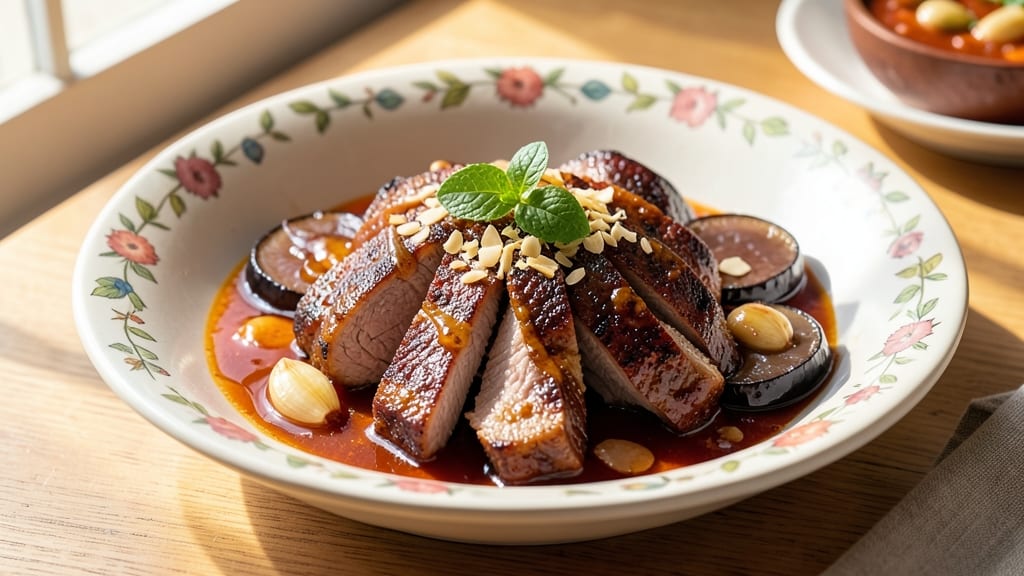
This adobong talong with pork recipe brings Filipino comfort food to life with tender pork, velvety eggplant, and a caramelized crispy topping that seals in all the smoky-sweet flavors. 🔥 I first tasted this dish in Manila, where it’s a staple for family gatherings—rich, hearty, and packed with layers of umami from soy sauce, vinegar, and brown sugar.
The key is balancing the sweet-sour sauce while achieving that perfect crispy crust on top, which adds both texture and depth. What sets this recipe apart is the braising technique, where pork and eggplant cook low and slow until fork-tender, absorbing the deep, complex flavors of the adobo.
I’ve streamlined the process without sacrificing authenticity, so you can recreate this restaurant-quality dish in your own kitchen. The crispy topping isn’t just for show—it’s the secret to locking in moisture while adding a satisfying crunch.
By the time you’re done, you’ll have a steaming pot of crispy-topped adobo that’s ready to serve over steamed rice. The pork will be fall-apart tender, the eggplant perfectly soft yet holding its shape, and the sauce thickened just enough to coat every bite.
It’s the kind of dish that tastes even better the next day, making it ideal for meal prep or feeding a crowd. For an extra touch, garnish with fresh cilantro or a squeeze of calamansi if you can find it—though a splash of lemon works just as well.
Let’s get cooking!
Ingredients for adobong talong with pork
Pantry staples and a few Asian market finds for this smoky, crispy Filipino classic.
| Ingredient | Amount | Notes |
|---|---|---|
| Pork Shoulder 🥩 | 1 ½ lb | Cut into 1-inch cubes |
| Eggplant 🍆 | 2 medium | Japanese or Asian variety preferred |
| Soy Sauce 🍶 | ½ cup | Dark or regular, not low-sodium |
| Cane Vinegar 💧 | ¼ cup | White or cane vinegar |
| Brown Sugar 🍯 | ¼ cup | Packed, not granulated |
| Garlic Cloves 🧄 | 8 cloves | Minced, about 2 tbsp |
| Onion 🧅 | 1 medium | Diced, about 1 cup |
| Bay Leaves 🌿 | 2 whole | Dried, for depth of flavor |
| Black Peppercorns 🌶️ | ½ tsp | Crushed, for heat |
| Salt 🧂 | 1 ½ tsp | Kosher or sea salt |
| Olive Oil 🫒 | ¼ cup | For crispy topping |
| Breadcrumbs 🍞 | ½ cup | Panko for extra crunch |
| Fresh Cilantro 🌿 | ¼ cup | Chopped, for garnish |
| Lemon Juice 🍋 | 1 tbsp | Freshly squeezed |
The eggplant and pork shoulder are the stars here. Japanese eggplant (the long, slender kind) has fewer seeds and stays firmer when cooking, but regular eggplant works too. For the pork, shoulder or pork butt gives the best texture—cubed into 1-inch pieces so it cooks evenly. If you can't find cane vinegar, white vinegar or apple cider vinegar in a pinch. The garlic and onion are non-negotiable for that deep umami flavor—don't skip mincing them finely. I grab my soy sauce from Asian markets where they have the dark, aged varieties, but regular soy sauce works if that's what you've got.
No cane vinegar? Substitute white vinegar or apple cider vinegar at the same amount—it'll taste slightly different but still work. Brown sugar not packed? Tap it lightly to settle before measuring, or use granulated sugar with a pinch less. For the crispy topping, panko breadcrumbs are ideal, but regular breadcrumbs toasted in a dry pan work too. The cilantro is just for garnish—skip it if you don't like the flavor. The key to that perfect crispy crust? Mixing the breadcrumbs with olive oil and salt before topping—don't skip the salt, it makes all the difference.
This dish tastes even better the next day as the flavors meld. Store in an airtight container in the fridge for up to 4 days. The crispy topping stays crunchy for about 2 days if you keep it sealed. For meal prep, double the batch—it reheats beautifully. The sauce thickens as it cools, so add a splash of water if it seems too thick when reheating. Garnish with cilantro or a squeeze of lemon right before serving—that bright pop of acidity cuts through all the richness.
Why You'll Love This Recipe
- One-Pan Magic: I swear by this—pork shoulder and eggplant simmer together in the same pot, no chopping marathons or fancy prep. Just slice, sear, and let the vinegar and soy sauce work their magic while you stir.
- Sweet-Savory Bomb: That balance of cane vinegar’s tang, soy sauce’s umami, and brown sugar’s caramelized bite? It’s the kind of flavor that makes you reach for seconds without even thinking. The eggplant soaks it all up like a sponge.
- Weeknight to Potluck: Make a double batch on Sunday and reheat it all week—it tastes just as good cold as it does hot. Bring it to gatherings, and no one will guess it’s a 20-minute weeknight meal.
- Budget-Friendly Feast: Pork shoulder stretches for miles, eggplant’s cheap as chips, and pantry staples like soy sauce and vinegar won’t break the bank. Here’s what sold me—this feeds four for under $15, and leftovers taste even better the next day.
Step-by-step instructions for adobong talong with pork
Here's how to create this Filipino classic with tender pork, caramelized eggplant, and a crispy breadcrumb topping.
🔥 Step 1: Sear the Pork Shoulder for Deep Flavor
Heat a large Dutch oven over medium-high heat. Add the 1.5 lb pork shoulder cut into 1-inch cubes and cook undisturbed for 3-4 minutes per side until golden brown. You're building flavor here—don't rush this step.
Once browned, remove the pork and set aside. In the same pot, add 2 tablespoons of the olive oil and the diced onion. Sauté for 3-4 minutes until softened and starting to caramelize. Add the minced garlic cloves and cook for 30 seconds until fragrant. This aromatic base will form the flavor foundation of your stew.
🍳 Step 2: Simmer the Adobo Base
Return the browned pork to the pot. Add the 0.5 cup soy sauce, 0.25 cup cane vinegar, 0.25 cup packed brown sugar, 1.5 tsp salt, 0.5 tsp crushed black peppercorns, and 2 whole bay leaves. Stir well to combine all ingredients.
Bring the mixture to a boil, then reduce heat to medium-low and let it simmer uncovered for 30 minutes. The pork should be tenderizing and the sauce starting to thicken slightly. Here's where the magic happens—the vinegar and soy sauce work together to create that signature tangy-sweet balance. Stir occasionally to prevent sticking.
🥘 Step 3: Add and Caramelize the Eggplant
While the pork simmers, cut the 2 medium eggplant into 1-inch cubes. Add them to the pot and gently stir to coat in the sauce. Increase heat to medium-high and let the eggplant cook for 8-10 minutes, stirring occasionally, until they begin to soften and the sauce starts to thicken.
Here's the thing—eggplant absorbs liquid like a sponge. You want it tender but not mushy. The caramelization from the residual sugar in the sauce will give it that beautiful glossy appearance. If the sauce gets too thin during cooking, reduce heat slightly and let it simmer longer to thicken naturally.
🔥 Step 4: Create the Crispy Breadcrumb Topping
In a small bowl, mix together the 0.5 cup breadcrumbs, 1 tbsp lemon juice, and the remaining 2 tablespoons olive oil. Spread this mixture evenly over the top of the stew in the Dutch oven. The lemon juice adds brightness that cuts through the richness.
Place the Dutch oven under a broiler for 3-5 minutes until the topping turns deep golden brown and crispy. Watch it closely—it burns quickly! This crispy layer is what makes this dish so special, adding texture contrast to the tender stew beneath.
🍽️ Step 5: Finish and Serve
Remove from the broiler and let the stew rest for 5 minutes. This gives the juices time to redistribute and the flavors to meld. Stir gently, then taste and adjust seasoning if needed—you might want to add a splash more soy sauce or vinegar to balance the flavors.
Garnish with 0.25 cup chopped fresh cilantro just before serving. The bright green color contrasts beautifully with the rich stew. Serve immediately with steamed rice to soak up all that delicious sauce. The crispy topping should be crunchy enough to hold its shape when you spoon it onto your rice!
Pro Tips For Making Adobong Talong With Pork
- CHAR THE PORK FIRST: I learned this the hard way—skipping the char on pork shoulder means your adobo sauce will taste bland. Sear the meat in a hot pan until deep brown spots form before simmering. That crust carries the flavor through the long cook.
- SLICE EGPLANT THIN: Thick eggplant slices turn mushy in vinegar-heavy sauce. Cut them ½-inch thick, then parboil for 3 minutes to soften edges without falling apart. Trust me, they’ll hold up better than you’d expect.
- DON’T RUSH THE VINEGAR: Pouring cane vinegar at the start makes the pork tough. Wait until the meat’s halfway cooked, then add it gradually. The acid needs time to mellow—like a stubborn guest, it’ll soften if you’re patient.
- USE LESS SOY SAUCE: I used to drown the dish in soy sauce, but it overpowers the sweetness. Stick to 2 tablespoons—just enough to coat the pork. The brown sugar and vinegar balance better when the sauce isn’t salty.
Best sauces and condiments for these flavors
Classic Adobo Sauce
The heart of this dish is the adobo sauce, where soy sauce and cane vinegar create that signature tangy-sweet balance. I always use dark soy sauce from Asian markets for deeper color and richer flavor, but regular soy sauce works in a pinch.
The brown sugar caramelizes beautifully during simmering, adding natural sweetness that rounds out the acidity. 💛
Crispy Breadcrumb Topping
This isn't just garnish—it's the star of the dish! Mix ½ cup panko breadcrumbs with 1 tbsp lemon juice and 2 tbsp olive oil for that perfect golden-brown crust. The lemon juice cuts through the richness while keeping the topping light and crispy.
Spread it evenly before broiling for 3-5 minutes—watch it closely or it'll burn faster than you think!
Sweet Chili Jam Twist
For a modern take, stir in 2 tbsp sweet chili jam with the soy sauce at the start. It adds fruity depth and a subtle heat that pairs beautifully with the eggplant.
I like Maesri Thai Sweet Chili Jam for its perfect balance of sweetness and spice. This works especially well if you prefer your adobo with a little kick. 🌶️
Coconut Milk Version
Craving something creamier? Replace ¼ cup of the soy sauce with ¼ cup coconut milk for a richer, slightly tropical version. The coconut milk softens the acidity while adding a velvety texture.
I use full-fat canned coconut milk for the best results—it's worth the extra richness. Garnish with toasted coconut flakes for an extra touch.
Spicy Vinegar Dip
Serve with a quick vinegar dip made by whisking 2 tbsp cane vinegar, 1 tbsp soy sauce, 1 tsp brown sugar, and a pinch of crushed red pepper flakes.
This tangy, spicy dip cuts through the richness of the stew and adds another layer of flavor. It's perfect for scooping up extra sauce or mixing into the rice. 🔥
Garnish Variations
Fresh cilantro is classic, but you can also try thinly sliced scallions or crushed peanuts for texture. If you have calamansi juice (Filipino lime), a squeeze brightens the dish beautifully.
For a smoky touch, sprinkle with toasted sesame seeds right before serving. These garnishes elevate the dish without overpowering the main flavors.
Nutrition facts
Frequently asked questions
Can I use regular eggplant instead of Japanese eggplant?
While Japanese eggplant has fewer seeds and stays firmer, regular eggplant works perfectly. Just cut it into slightly smaller pieces (½-inch cubes) so it cooks evenly. The skin will soften more, but the flavor remains delicious. For extra texture, you could even roast the eggplant first for 10 minutes before adding it to the stew.
How do I prevent the crispy topping from burning?
Broil on medium-high heat for 3-4 minutes max—watch closely! Keep the oven door slightly open to allow steam to escape, which helps prevent sudden burning. For a foolproof method, spread the breadcrumb mixture on a baking sheet first, broil for 2 minutes, then sprinkle over the stew just before serving.
What's the best way to store leftovers?
Store in an airtight container in the fridge for up to 4 days. The crispy topping stays crunchy for 2 days if sealed properly. Reheat gently on the stove with a splash of water to restore moisture. For longer storage, freeze portions without the topping—just add fresh breadcrumbs when reheating to recreate the crispy layer.
Can I make this dish without a Dutch oven?
Yes! Use a heavy-bottomed pot or even a deep skillet. For the crispy topping, transfer the stew to an oven-safe dish and broil separately. If you don't have a broiler, toast the breadcrumb mixture in a dry skillet over medium heat for 2-3 minutes until golden, then sprinkle over the stew just before serving.
Why does my sauce taste too sweet or sour?
Balance is key! If it's too sweet, add 1 tbsp more vinegar and simmer for 5 minutes. For extra sourness, add 1 tbsp soy sauce. Taste as you go—the sauce should have equal parts tangy, sweet, and umami. Remember, flavors intensify as the dish cools, so adjust while it's still warm.