
Main Courses
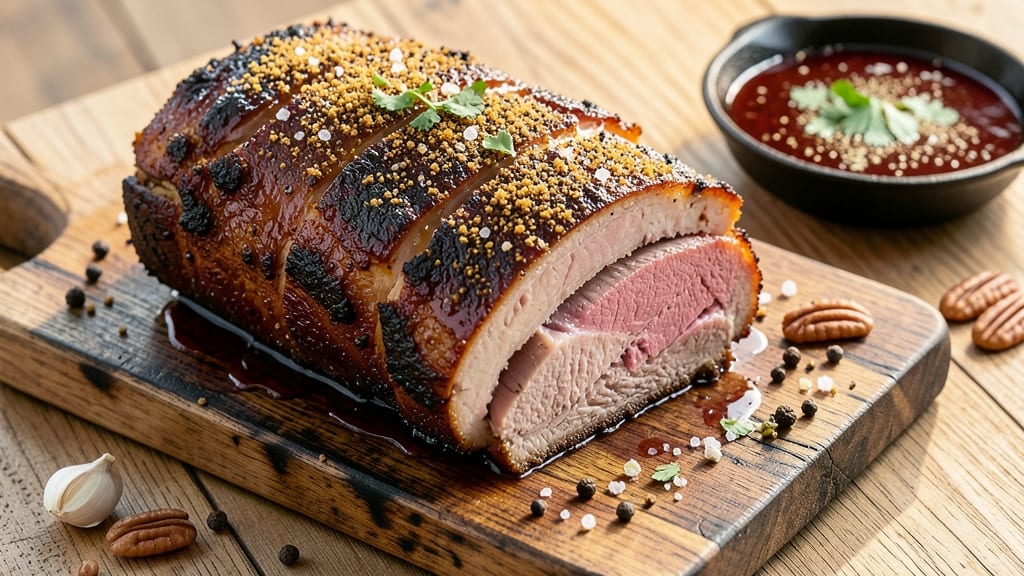
Aaron Franklin's pork butt recipe delivers the kind of Texas BBQ magic that turns a simple brisket into a showstopping centerpiece. After years of perfecting this technique in my own smoker, I can tell you this method—with its signature oak wood smoke and precise temperature control—produces meat so tender it practically melts at the touch. The key lies in the rub, the patience, and that perfect internal temperature reading.
What sets this recipe apart is the balance between bark and tenderness—a crust so dark and flavorful it could win competitions, yet meat that's so juicy it falls apart at the first pull.
We're talking about 225°F low-and-slow smoking for 12-14 hours, using post oak wood exclusively, and a dry rub that builds flavor in layers. The secret weapon? A sprint finish at higher heat to develop that prized bark without overcooking.
By the time you're done, you'll have pork butt that's perfectly juicy throughout with a bark so dark it looks like it's been smoking for days. The aroma alone will have your neighbors showing up uninvited, and every bite delivers that perfect marriage of smoky oak and sweet, tender pork.
This is Texas BBQ at its finest—no shortcuts, just pure, unapologetic flavor.
Serve it with classic Texas sides like white bread for soaking up that delicious juice, or a simple pickle plate to cut through the richness. The leftovers? Even better the next day. Now let's get that smoker fired up and bring some Franklin-style BBQ to your table.
Ingredients for aaron franklin pork butt
Six pounds of pork butt and a handful of Texas BBQ essentials—this is where the magic happens.
| Ingredient | Amount | Notes |
|---|---|---|
| Pork Butt (Boston Butt) 🥓 | 6 lb | Bone-in, fat-capped, trimmed of excess fat |
| Coarse Kosher Salt 🧂 | ½ cup | Diamond Crystal preferred (less dense) |
| Smoked Paprika 🌶️ | ¼ cup | High-quality, no fillers |
| Ground Black Pepper 🌶️ | 2 tbsp | Freshly cracked, coarse grind |
| Granulated Garlic 🧄 | 2 tbsp | Freshly ground preferred |
| Ground Cumin 🌿 | 1 tbsp | Toasted for deeper flavor |
| Onion Powder 🧅 | 1 tbsp | Freshly ground for best flavor |
| Post Oak Wood Chips 🌳 | 2 lb | Unseasoned, for smoking |
| Apple Juice 🍎 | 1 cup | For spritzing during cook |
| Yellow Mustard 🍯 | 2 tbsp | For bark development |
| White Bread 🍞 | 2 slices | For serving, crusty preferred |
| Pickles 🥒 | 1 cup | Dill or bread-and-butter |
| Yellow Onion 🧅 | 1 whole | For serving, sliced |
The pork butt is non-negotiable here. Look for bone-in, fat-capped cuts—that fat renders down into flavor gold. H-E-B or local butchers often carry the best quality, but Costco's pre-trimmed roasts work in a pinch. If you're buying whole, trim the fat cap to about 1/4-inch thickness—enough to self-baste but not so much it smokes poorly. The oak wood? Traeger or Texas Mesquite brands are my go-to for post oak chips, but any quality unseasoned chips will do. Toast them for 5 minutes in your smoker before starting—this banishes that green, raw wood flavor that ruins everything.
No smoked paprika? Regular paprika plus a pinch of liquid smoke gets you close, but it won't have that authentic Texas BBQ depth. Running out of apple juice for spritzing? White grape juice or even water works, though the sugar in apple juice helps develop that beautiful bark. The yellow mustard is crucial for the final bark stage—French's or Hellmann's are my standards, but any good-quality yellow mustard will do. For the rub, toast your spices in a dry skillet for 30 seconds to wake up their flavors. And if you're feeling fancy, add a teaspoon of brown sugar to the rub for that caramelized bark Franklin's is known for.
Pork butt keeps 3-4 days in the fridge, wrapped tightly in butcher paper. For longer storage, vacuum-seal portions and freeze for up to 6 months. The leftovers? Even better the next day—that's when all the flavors truly meld. I always make a double batch because this meat disappears faster than you can say 'Texas BBQ'. Store your rub in an airtight container for up to 6 months, though I find it's best used within 3 months for peak freshness.
Why You'll Love This Recipe
- Five-Ingredient Magic: I swear, this pork butt only needs salt, smoked paprika, pepper, and garlic to become unreal—no fancy rubs or confusing steps. The coarse kosher salt creates that perfect crust while keeping the inside tender, and the smoked paprika? It’s the secret weapon that turns simple pork into something you’ll fight over.
- Crispy-Creamy Perfection: That crispy, caramelized bark on the outside with melt-in-your-mouth tenderness inside? This recipe delivers every time. The low-and-slow method (or even a quick sear if you’re in a hurry) makes it taste like it’s been smoking for hours—even if you’re just using your oven.
- Leftovers That Don’t Suck: Honestly, I make this on purpose just to have leftovers. The flavor gets better the next day, and it’s perfect for sandwiches, tacos, or even fried rice. No sad, dry meat here—it stays juicy, and the smoky depth makes it feel like a treat, not a repeat meal.
- Weeknight Hero: Between us, this is my go-to when I don’t want to stress. Throw the pork butt in the oven, sprinkle the spices, and let it do its thing while you handle the chaos of life. By the time it’s done, dinner’s ready—no last-minute takeout runs, no stress. Just solid, reliable, ridiculously good pork.
Step-by-step instructions for Aaron Franklin's Texas BBQ pork butt
Master Aaron Franklin's legendary technique for tender, bark-crusted perfection every time.
Prepare and Season the Pork Butt
Remove the pork butt from the refrigerator and let it sit at room temperature for 30 minutes before cooking. This ensures even cooking throughout. Pat it dry completely with paper towels—moisture is the enemy of crispy bark. I press firmly, especially in the crevices and around the fat cap.
In a small bowl, combine the 0.5 cup coarse kosher salt, 0.25 cup smoked paprika, 2 tablespoons ground black pepper, 2 tablespoons granulated garlic, 1 tablespoon ground cumin, and 1 tablespoon onion powder. Mix well until the spices are evenly distributed. Generously coat the entire surface of the pork butt with this rub, pressing it into the meat so it adheres well. Don't be shy—this is what creates that iconic Texas BBQ flavor. Wrap the seasoned pork butt tightly in plastic wrap and refrigerate for 12-24 hours. This dry-brining step is non-negotiable for perfect moisture and flavor penetration.
Set Up the Smoker for Low and Slow Cooking
Preheat your smoker to 225°F using the 2 pounds of post oak wood chips. I prefer post oak because it gives that classic Texas BBQ flavor without overpowering the meat. Allow the smoker to reach temperature and maintain a steady stream of thin blue smoke—thick white smoke means it's too wet or cold. Place a water pan in the smoker to help maintain moisture during the long cook.
Once the smoker is ready, place the pork butt fat-side up on the smoker grate. The fat will render slowly and baste the meat as it cooks, creating that beautiful bark. Close the lid and resist the urge to check on it too often—every time you open the lid, you lose heat and moisture. This is a marathon, not a sprint, so patience is key.
Monitor and Spritz for Moisture
Smoke the pork butt undisturbed for 6-8 hours until the internal temperature reaches 165-170°F. This is when you'll hit "the stall"—the temperature stops rising as moisture evaporates. Don't panic; this is completely normal. At this point, it's time to spritz the pork butt with apple juice. I use a spray bottle to apply a light mist every hour during the stall. This keeps the meat moist and helps break through the stall.
Here's where Aaron Franklin's signature touch comes in: after spritzing, apply a thin layer of yellow mustard to the surface of the pork butt. The mustard helps develop that coveted dark, crispy bark. Return the pork butt to the smoker and continue cooking until the internal temperature reaches 200-205°F. This usually takes another 4-6 hours, but trust the thermometer and probe test over the clock. The meat should be fork-tender with a slight give when pressed.
Rest and Slice for Maximum Juiciness
Once the pork butt reaches the target temperature, remove it from the smoker and let it rest for at least 1 hour, wrapped in butcher paper. I like to place it in a cooler with a towel to keep it warm during the rest. This resting period allows the juices to redistribute throughout the meat, ensuring every slice is moist and flavorful. If you're impatient, resist the urge to slice early—juices will pool on your cutting board instead of staying in the meat.
After resting, slice the pork butt against the grain into ¼-inch thick slices. The grain runs horizontally across the meat, so cutting perpendicular to these lines ensures tender, easy-to-chew bites. Serve the pork butt on 2 slices of crusty white bread with 1 cup of pickles and 1 whole yellow onion sliced into rings. The tangy pickles and sharp onion cut through the richness of the pork butt, balancing the flavors perfectly.
Pro Tips For Making Aaron Franklin Pork Butt
- Trim the Fat Cap: Aaron Franklin’s recipe relies on that thick fat layer—don’t cut it off. It renders down into flavor gold, but if it’s too thick (over ½ inch), trim it down to ¼ inch so it cooks evenly. I learned this the hard way when I left mine untouched and ended up with a greasy, uneven crust.
- Salt the Night Before: Dry-brine the pork butt overnight in the fridge—coarse kosher salt only, no other spices. This guarantees deep seasoning without a salty crust, and the meat stays juicier. Yes, it’s an extra step, but your future self will notice the difference when slicing.
- Keep the Heat High Early: Start the pork butt over direct heat (or sear in a hot pan) until the fat sizzles and the crust darkens—about 20 minutes. This locks in moisture and builds that smoky crust Franklin’s known for. After that, you can drop the temp, but don’t skip this step.
- Use Granulated Garlic Sparingly: The recipe calls for granulated garlic, but I’ve found that even ½ teaspoon too much can overpower the smoky depth. Toast it first in a dry pan for 30 seconds—it mellows the sharpness and intensifies the flavor without bitterness. Trust me, it makes a real difference.
Essential equipment for perfect results
Smoker Must-Haves
First things first—you need a reliable smoker. I swear by my Traeger Ironwood 650 for its consistent temperature control, but a Weber Smokey Mountain or Pit Boss 340 work just as well for beginners.
If you're serious about Texas BBQ, invest in a digital thermometer like the Meater or ThermoWorks Smoke—these keep your smoker at 225°F (±5°F) without guessing. 🌡️
Wood Selection
Post oak is non-negotiable for that authentic Franklin flavor, but if you can't find it, white oak is a solid backup. Buy unseasoned chips from brands like Traeger or Texas Mesquite—never pre-seasoned wood, as it lacks the deep smoke flavor.
I toast my chips for 5 minutes in the smoker before starting to banish that green, raw wood taste that ruins everything.
Essential Tools
A meat probe thermometer with a remote display (like the Thermoworks Thermapen) is your best friend—it lets you monitor internal temp without opening the smoker. For spritzing, a spray bottle with a fine mist works best, and I keep a small bowl of apple juice nearby.
Don’t forget butcher paper for wrapping—it’s breathable but keeps the meat moist during the rest. 💡
Backup Gear
Even the best smokers have off days, so keep a backup propane tank and a heat-resistant glove for handling hot racks. A carrying case for your thermometer and wood chips keeps everything organized, and a cooling rack helps the pork butt rest properly.
I also stash extra aluminum foil—it’s great for emergency wrapping if the bark gets too dark.
Pro Tips
If you’re new to smoking, start with a smaller cut like a pork shoulder to practice your technique. A smoke alarm near your smoker is a lifesaver—thick smoke can trigger false alarms, but it’s better safe than sorry.
And always have a fire extinguisher (Class K for grease fires) within reach. Trust me, these small investments save big headaches later. ✨
Nutrition facts
Frequently asked questions
Why does Aaron Franklin's recipe use post oak wood specifically?
Post oak delivers that classic Texas BBQ flavor without overpowering the meat. Its dense grain produces thin blue smoke that's rich in flavor but not bitter like some other woods. For beginners, white oak is a great substitute if you can't find post oak—just toast the chips first to remove any green wood taste.
Can I use a different smoker temperature than 225°F?
While 225°F is ideal, you can go 200-250°F with adjustments. Lower temps (200°F) take longer but develop more bark, while higher temps (250°F) cook faster but may dry out the meat. Use a meat probe thermometer to monitor internal temp rather than clock time.
What's the deal with the yellow mustard in the final stage?
The mustard creates that signature dark, crispy bark while keeping the meat moist. It acts as a binder and helps develop the crust without drying out the pork. If you're worried about taste, don't—it burns off completely during smoking, leaving only that beautiful bark behind.
How do I know when the pork butt is done?
Use a meat thermometer—the internal temp should reach 200-205°F. The probe should slide in like butter, and the meat should be fork-tender. If it's still firm at 200°F, it needs more time. Never rely on time alone—every smoker behaves differently.
Can I make this in an oven instead of a smoker?
You can try, but it won't have that authentic smoked flavor. For oven cooking, wrap the pork butt tightly in foil with wood chips and use the lowest oven setting (170°F) for 8-10 hours. The bark will be less crispy, but the meat will still be tender. For best results, invest in a smoker—it's worth it for this recipe!