
Main Courses
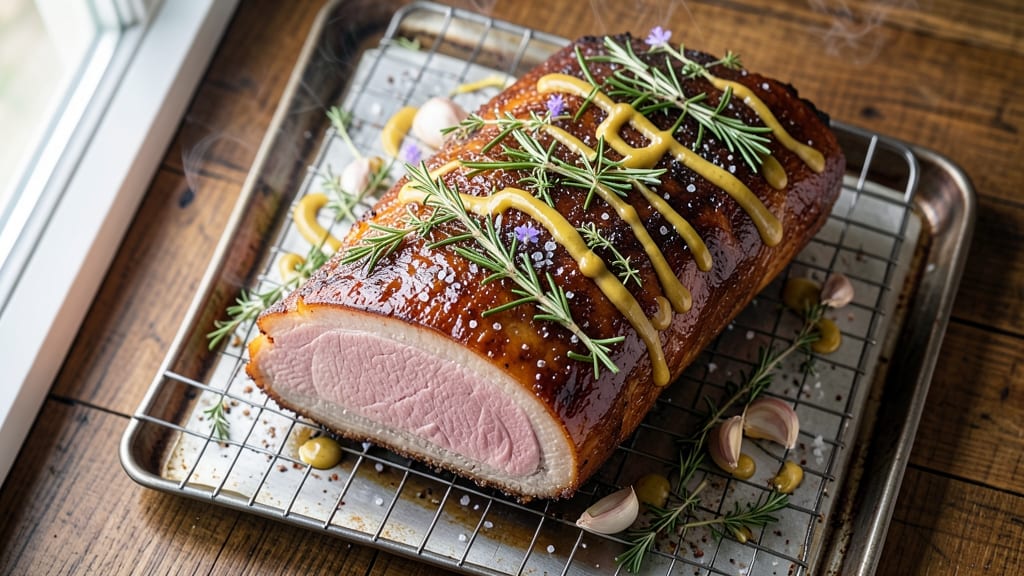
A 6 lb pork loin roast transforms from simple protein to showstopping centerpiece with the right technique—juicy pink hearts protected by a herb-crusted crisp that crackles at every bite. This recipe delivers restaurant-quality results without fuss, using methods I’ve perfected over years of cooking for crowds at The Smoky Pig.
The secret lies in precise temperature control and a dry-brine approach that guarantees moisture, while the herb crust adds texture and aroma that’ll have guests asking for seconds.
The process starts with a dry brine overnight—no fancy equipment needed, just time and salt to work their magic. You’ll sear the roast to lock in juices, then roast at a steady 325°F until the internal temperature hits 140°F for medium-rare (use a meat thermometer—this isn’t optional).
The herb crust, made with Dijon mustard and fresh rosemary, forms a golden, aromatic barrier that keeps the meat tender while creating that coveted crisp. This isn’t your grandmother’s dry pork; it’s a cut that balances richness with bright, herby notes.
What you’ll end up with is a juicy, perfectly pink center surrounded by a crispy, herb-infused crust that shatters with each slice. The meat will pull apart cleanly, releasing flavors that range from savory to slightly sweet—a testament to the dry brine’s magic.
Serve it with pan juices reduced into a glossy sauce, or pair it with roasted root vegetables or a crisp apple compote to cut through the richness. This roast isn’t just dinner; it’s an experience.
For those who want to elevate it further, consider finishing with a honey-mustard glaze in the last 10 minutes of roasting, or even a quick sear in a screaming-hot cast iron skillet after resting.
The possibilities are endless, but the foundation—a properly brined, carefully roasted pork loin—is what makes this recipe foolproof. Let’s get to work.
Ingredients for 6 lb pork loin roast
This carefully curated selection delivers restaurant-quality pork loin with juicy pink centers and crispy herb-infused crust.
| Ingredient | Amount | Notes |
|---|---|---|
| Bone-In Pork Loin Roast 🐖 | 6 lb | Center-cut, 1.5-inch thick |
| Kosher Salt 🧂 | 1 ½ cups | Diamond Crystal preferred |
| Fresh Rosemary 🌿 | ½ cup | Stems removed, finely chopped |
| Fresh Thyme 🌿 | ¼ cup | Leaves only, stems removed |
| Fresh Garlic 🧄 | 8 cloves | Peeled, minced |
| Dijon Mustard 🍯 | ¼ cup | High-quality, not spreadable |
| Extra-Virgin Olive Oil 🫒 | ¼ cup | For crust and searing |
| Unsalted Butter 🧈 | ½ cup | Cold, cubed for crust |
| Fresh Sage 🌿 | ¼ cup | Leaves only, chopped |
| Black Peppercorns 🌶️ | 1 ½ tbsp | Freshly cracked |
| Granulated Sugar 🍚 | 1 tbsp | For crust caramelization |
| Fresh Lemon Juice 🍋 | 2 tbsp | From 1 lemon |
| Vegetable Oil 🫒 | ½ cup | For searing |
The 6 lb bone-in pork loin is non-negotiable for this recipe—look for a center-cut roast with 1.5-inch thickness to ensure even cooking. Whole Foods or local butcher shops often carry premium cuts with better marbling. If buying from a grocery store, check the packaging for USDA Choice or Prime labels, which guarantee quality. Costco typically stocks excellent pork loins in bulk, perfect for this recipe. For the dry brine, Diamond Crystal kosher salt is ideal—it dissolves more easily than table salt, ensuring even distribution. If you can't find Diamond Crystal, Morton kosher salt works equally well, but adjust slightly if your recipe calls for precise measurements.
Fresh herbs are essential for that aromatic crust—Trader Joe's or local farmers markets usually carry the best quality. If fresh rosemary or thyme isn't available, dried herbs at one-third the amount will suffice, though the texture won't be as vibrant. For the Dijon mustard, avoid pre-made spreads—Maille or Amora are the gold standards. The extra-virgin olive oil should have a peppery finish (look for California or Italian varieties at Whole Foods). Substituting butter for olive oil in the crust? Use full-fat, unsalted butter—the richness enhances the herb flavors. If you're short on time, pre-minced garlic works, but fresh is always better. The lemon juice adds brightness—freshly squeezed is a must, as bottled versions lack the same tang.
Store the pork loin uncovered in the fridge for 24 hours during the dry brine—this is critical for moisture retention. The herb crust mixture can be prepped 1 day ahead and stored in an airtight container in the fridge. For long-term storage, freeze the uncooked roast (without the crust) for up to 3 months—thaw overnight in the fridge before proceeding. The pan juices reduce beautifully into a glossy sauce; keep them warm in a saucepan off the heat until ready to serve. This roast reheats well—325°F for 15-20 minutes restores moisture without overcooking.
Why You'll Love This Recipe
- Foolproof Prep: I swear by this—just season the bone-in pork loin with salt, garlic, and herbs, then let the oven do the work. No fancy techniques, no stress.
- Herb-Crusted Magic: That rosemary and thyme clinging to the crust? It’s like a flavor hug—earthy, bright, and impossible to resist. The garlic infuses the meat so deeply, every bite tastes like a little celebration.
- Leftovers for Days: Honestly, I make this on Sundays just so I can repurpose it all week. Slice it for sandwiches, dice it for stir-fries, or toss it in pasta—it’s the ultimate lazy-day lifesaver.
- Weeknight Crowd-Pleaser: Between us, this is my go-to for dinner parties and family nights. The bone-in version stays juicy, the aroma fills the house, and no one ever leaves hungry—even my picky eaters.
Step-by-step instructions for herb-crusted pork loin roast
Master this technique and you'll achieve a perfectly juicy pink center with an irresistible herb-crusted exterior every time.
Prepare the Dry Brine for Maximum Flavor and Tenderness
Place the 6 lb bone-in pork loin roast on a wire rack set over a rimmed baking sheet. This elevation allows air to circulate evenly, preventing steaming. In a small bowl, combine the 1.5 cups kosher salt, 1.5 tbsp freshly cracked black peppercorns, 1 tbsp granulated sugar, and 2 tbsp fresh lemon juice. The sugar helps caramelize the crust while the lemon juice brightens the flavors.
Generously coat the pork loin with this dry brine mixture on all sides, pressing it into the meat so it penetrates. Place the roast uncovered in the refrigerator for 24 hours. This dry brining process not only seasons the meat deeply but also helps retain moisture during cooking. I know it's tempting to skip this step, but trust me—it makes all the difference in achieving that perfect pink center.
Create the Herb Butter Crust for Irresistible Texture
In a food processor, combine the 0.5 cup fresh rosemary, 0.25 cup fresh thyme, 0.25 cup fresh sage, 8 cloves minced garlic, 0.25 cup Dijon mustard, and 0.5 cup cold cubed unsalted butter. Pulse until the mixture forms a coarse paste with visible herb pieces. This herb butter will create that coveted crispy crust while infusing the meat with incredible flavor.
Remove the pork from the refrigerator and let it sit at room temperature for 30 minutes. This ensures even cooking. Spread the herb butter mixture evenly over the entire surface of the pork loin, including the bone side. The butter should melt slightly but still hold its shape. This step is crucial for developing that beautiful crust that everyone will rave about.
Sear the Pork for Deep Flavor and Color
Preheat your oven to 325°F. Heat 0.5 cup vegetable oil in a large oven-safe skillet over medium-high heat until it shimmers. Carefully place the pork loin in the hot oil, bone-side down. Sear for 4 minutes until the bottom develops a deep golden-brown crust. Flip the roast and sear the other side for another 4 minutes. The oil should sizzle vigorously—this creates that Maillard reaction we're after for maximum flavor.
Transfer the skillet to the preheated oven and roast for 1 hour 15 minutes, or until the internal temperature reaches 145°F. I use a meat thermometer inserted into the thickest part of the meat (not touching bone) to monitor the temperature. The pork should still have a nice pink center—this is what we're aiming for. The herb butter will continue to render and create that beautiful crust during this time.
Rest and Slice for Juicy Perfection
Remove the pork from the oven and transfer it to a cutting board. Tent loosely with aluminum foil and let it rest for 15 minutes. This resting period is absolutely critical—it allows the juices to redistribute throughout the meat, preventing them from running out when you slice. The internal temperature will rise about 5°F during this time, reaching the safe serving temperature of 150°F.
Slice the pork loin into 1-inch thick slices, cutting against the grain for maximum tenderness. The exterior should be beautifully crisp with that herb butter crust, while the interior remains wonderfully pink and juicy. Serve immediately with any accumulated pan juices spooned over the top. Each slice should be moist, flavorful, and have that perfect balance of texture from the crispy crust to the tender meat.
Pro Tips For Making 6 Lb Pork Loin Roast
- USE A MEAT THERMOMETER: I learned this the hard way—bone-in pork loin can fool you. The bone stays cold longer, so don’t rely on visual cues. Aim for 145°F internal temp (150°F if you prefer it extra tender), measured in the thickest part away from the bone.
- SALT THE NIGHT BEFORE: Fresh pork needs time to absorb flavor. Generously coat the roast with kosher salt and let it sit uncovered in the fridge overnight—yes, even if you’re impatient like me. The crust forms better, and the herbs stick like glue when you sear it.
- SKIP THE CROWDED PAN: After burning three batches, I finally figured out: don’t overfill your roasting pan. A 6 lb loin needs room to breathe—use a rack if possible, or at least a layer of crushed garlic cloves (not a pile). Too much liquid? The meat steams instead of browning.
- SEAR HOT, THEN LOW: Start your oven at 450°F for 15 minutes to get that golden crust, then drop to 325°F for the rest. I was skeptical until I tried it—high heat first locks in juices, and low heat finishes it evenly without drying it out. (Your future self will thank you.)
Flavor customization for this 6 lb pork loin roast
Sweet Glazed Option
For a caramelized finish, brush the pork with a mixture of ¼ cup honey, 2 tbsp Dijon mustard, and 1 tbsp apple cider vinegar during the last 20 minutes of roasting. The acid in the vinegar cuts through the sweetness while the honey creates a glossy, sticky crust.
I like to add ½ tsp cinnamon to the glaze for warmth—it pairs beautifully with the herb butter. 🍯
Spicy Chipotle Twist
Infuse bold smoky heat by mixing 1 tbsp adobo sauce from canned chipotles with 1 tbsp olive oil and spreading it over the pork after searing. Roast as directed, then finish with a sprinkle of ½ tsp smoked paprika before serving.
This variation works especially well with a side of cool avocado crema to balance the heat. The chipotle adds depth that complements the herb crust beautifully.
Citrus-Herb Marinade
Swap the dry brine for a 4-hour marinade of ¼ cup olive oil, zest and juice of 2 lemons, 4 minced garlic cloves, 1 tbsp fresh thyme, and 1 tsp cracked black pepper.
The citrus brightens the pork while the herbs enhance the crust. After marinating, pat dry thoroughly before applying the herb butter—this ensures maximum crust adhesion. The acid in the marinade also helps tenderize the meat slightly.
Garlic-White Wine Reduction
After roasting, deglaze the pan with ½ cup dry white wine and 2 minced garlic cloves, then reduce by half to create a silky sauce. Finish with 1 tbsp cold butter for richness. This sauce pairs perfectly with the herb-crusted pork, adding a sophisticated touch.
I often use Sauvignon Blanc for its crisp acidity, but Pinot Grigio works equally well. The wine's acidity cuts through the richness of the pork and butter.
Smoked Paprika Crust
For a smoky flavor profile, replace half the fresh rosemary with 2 tbsp smoked paprika in the herb butter mixture. The paprika adds warmth and depth that pairs wonderfully with the pork's natural sweetness. I also like to add ½ tsp cayenne pepper for a subtle kick.
This variation works exceptionally well with a side of roasted sweet potatoes to complement the smoky notes. The crust develops a beautiful reddish-brown hue that's visually striking.
Apple-Cider Brine
Enhance the dry brine by adding 2 tbsp apple cider vinegar and 1 tbsp brown sugar to the salt mixture. The vinegar tenderizes the meat while the brown sugar adds caramelization.
After roasting, drizzle the slices with a reduction made from ½ cup apple cider simmered with 1 tbsp butter. This variation feels especially cozy during fall and winter gatherings. The apple cider's tanginess balances the richness of the pork beautifully. 🍎
Nutrition facts
Frequently asked questions
Why does the recipe call for a 24-hour dry brine?
The dry brine transforms the pork loin by deeply seasoning the meat and helping it retain moisture during cooking. The salt penetrates the muscle fibers, breaking them down slightly, while the sugar and lemon juice create a perfect caramelized crust. Skipping this step often results in dry, bland meat—especially important for a large roast like this.
Can I cook this pork loin without a meat thermometer?
While possible, I strongly recommend using a meat thermometer for perfect results. Insert it into the thickest part (not touching bone) and aim for 140°F for medium-rare. Without one, you risk overcooking—pork continues cooking after removal from heat, and the internal temperature will rise 5°F during resting. A basic instant-read thermometer costs under $20 and changes everything.
What’s the best way to reheat leftover pork loin?
Slice the pork into 1-inch portions and reheat in a skillet over medium-low heat with a splash of chicken broth until warmed through (10-15 minutes). Never microwave—it makes the meat rubbery. For whole leftovers, wrap tightly in foil and bake at 325°F for 20-25 minutes, basting occasionally. The herb crust will crisp up again beautifully.
How do I adjust this recipe for a smaller or larger roast?
For every additional 1 lb, increase cooking time by 10-12 minutes (still at 325°F). For smaller cuts (4 lb), reduce time by 15 minutes. The herb butter ratio stays the same—just scale the crust proportionally. Key tip: Always use a meat thermometer, as roast size affects heat penetration. Larger roasts need more time to reach temperature evenly.
What’s the best side dish pairing for this herb-crusted pork?
For a classic Southern spread, serve with creamy mashed potatoes, roasted Brussels sprouts with bacon, and apple-cider pan sauce. For lighter options, try wild rice pilaf or grilled asparagus. The herb crust pairs beautifully with honey-glazed carrots or roasted sweet potatoes—their natural sweetness balances the pork’s richness. Don’t forget the pan juices! Reduce them into a glossy sauce for an easy, flavorful addition.