
Main Courses
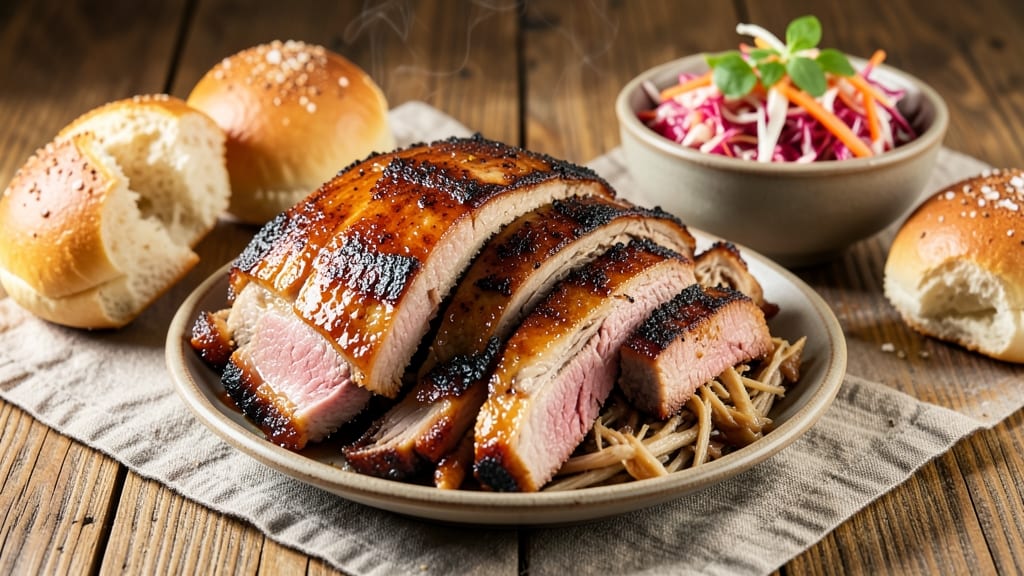
This 5-hour pulled pork recipe transforms tough pork shoulder into fork-tender, smoky-sweet shreds that make every sandwich unforgettable. I perfected this method after years of competing in BBQ championships, where low-and-slow cooking consistently wins.
The secret lies in the right balance of time, temperature, and a rub that develops deep, complex flavors without overpowering the natural richness of the meat.
The process begins with a dry rub of brown sugar, smoked paprika, and cayenne—just enough to create a flavorful crust while keeping the meat tender. After a 5-hour cook, the pork practically falls apart when you look at it, yielding shreds that soak up BBQ sauce beautifully.
This method works equally well in a smoker, oven, or slow cooker, giving you flexibility for any kitchen setup.
What you'll end up with is restaurant-quality pulled pork that's juicy, flavorful, and perfect for sandwiches, tacos, or bowls. The slow cooking process ensures every bite is tender, while the smoky-sweet rub delivers that classic Carolina BBQ taste.
It's the kind of dish that turns a simple meal into a showstopper, and it's easier than you think.
Serve with toasted buns, tangy coleslaw, and your favorite BBQ sauce for the full experience. The leftovers reheat perfectly, making this an ideal recipe for meal prep or feeding a crowd. Let's get cooking!
Ingredients for 5 hour pulled pork
Six pounds of pork shoulder and a handful of pantry staples transform into smoky-sweet perfection for sandwiches.
| Ingredient | Amount | Notes |
|---|---|---|
| Pork Shoulder (Bone-In) 🥩 | 6 lb | Tough cut for slow cooking |
| Brown Sugar 🍚 | ½ cup | Light or dark variety |
| Smoked Paprika 🌶️ | 2 tbsp | For deep smoky flavor |
| Ground Black Pepper 🌶️ | 1 tbsp | Freshly ground preferred |
| Cayenne Pepper 🔥 | 1 tsp | Adjust for heat preference |
| Kosher Salt 🧂 | 1 tbsp | Diamond Crystal preferred |
| Garlic Powder 🧄 | 1 tbsp | Fresh ground ideal |
| Onion Powder 🧅 | 1 tbsp | For depth of flavor |
| Apple Cider Vinegar 🍎 | ¼ cup | For tangy brightness |
| Yellow Onion 🧅 | 1 whole | Sliced for mop sauce |
| BBQ Sauce 🍅 | 2 cups | Store-bought or homemade |
| Butter 🧈 | 2 tbsp | Unsalted for mop sauce |
| Fresh Rosemary 🌿 | ¼ cup | Chopped for aroma |
| Fresh Thyme 🌿 | ¼ cup | Leaves only preferred |
| Water 💧 | 1 cup | For mop sauce liquid |
The pork shoulder is the star here—look for a cut with good marbling for maximum flavor. Costco or local butchers often have the best deals on bone-in pork shoulders, which stay juicier during the long cook. If you can't find bone-in, boneless works too, but it may dry out slightly faster. The rub ingredients are simple but powerful: brown sugar caramelizes beautifully, smoked paprika delivers that classic BBQ smokiness, and cayenne adds just enough heat to wake up your taste buds. I always buy spices in bulk from Penzeys or the grocery store's bulk section—they stay fresher longer and cost less per ounce. For the herbs, fresh is ideal, but dried works in a pinch if you've got it.
No smoked paprika? Regular paprika plus a pinch of liquid smoke gets you close. Running out of apple cider vinegar? White vinegar or lemon juice works just as well for the mop sauce. The BBQ sauce is where you can get creative—Sweet Baby Ray's is a crowd-pleaser, but homemade with ketchup, vinegar, and spices is even better. If you're using a slow cooker, you might need an extra cup of liquid to keep everything moist. The key is not to overload the pork with too much sauce at once—you want those flavors to develop slowly over the 5 hours. And trust me on the fresh herbs: dried thyme and rosemary work, but fresh has that bright, aromatic punch that makes all the difference.
This pork is at its best the day after cooking—those flavors meld together beautifully. Store leftovers in the fridge for 4-5 days or freeze for up to 3 months in airtight containers. I always make a double batch because it disappears so fast—perfect for meal prep or feeding a crowd. For reheating, low and slow is key: cover with foil and warm in a 300°F oven for about 20 minutes. The mop sauce keeps in the fridge for 1 week, so make extra for basting or drizzling over tacos. And if you've got any leftover rub, store it in a jar for up to 6 months—great for seasoning other meats or roasted veggies.
Why You'll Love This Recipe
- Sweet Heat Magic: That brown sugar caramelizes into something sticky and irresistible, while the smoked paprika adds this deep, smoky warmth. Honestly, the cayenne isn’t overpowering—just a little kick that makes every bite feel like a little reward. The bone-in shoulder stays juicy, falling apart at the touch of a fork.
- Leftovers That Shine: This recipe practically begs for seconds, and the best part? The pulled pork only gets better the next day. I’ll make a big batch on Sunday, then turn it into tacos, sandwiches, or even loaded baked potatoes all week. No sad leftovers here—just delicious handholds.
- Budget-Friendly Feast: A bone-in pork shoulder is the unsung hero of affordable meals, and this recipe stretches it across multiple servings without breaking the bank. Smoked paprika and cayenne are cheap spices that pack a punch, and brown sugar? Always in my pantry. Feeds four for under $15, and everyone leaves happy.
Step-by-step instructions for smoky-sweet pulled pork
Here's how to transform that tough pork shoulder into tender, fall-apart perfection.
Prepare the Pork Shoulder and Rub
Begin by removing the pork shoulder from the refrigerator and letting it sit at room temperature for 30 minutes. This ensures even cooking throughout. Pat the shoulder dry with paper towels—this step is crucial for that perfect bark later.
In a small bowl, combine the 0.5 cup brown sugar, 2 tablespoons smoked paprika, 1 tablespoon ground black pepper, 1 teaspoon cayenne pepper, 1 tablespoon kosher salt, 1 tablespoon garlic powder, and 1 tablespoon onion powder. Mix well to create a fine, even rub. Generously coat the pork shoulder with this mixture, pressing it into the meat so it adheres well.
Place the rubbed pork shoulder on a wire rack set inside a shallow roasting pan. This allows air to circulate around all sides, promoting even cooking and crispy bark formation. Cover loosely with aluminum foil and refrigerate for 1 hour before cooking. This chilling step helps the rub set and prevents the meat from releasing too much moisture during the initial cooking phase.
Low and Slow Cooking Process
Preheat your oven to 275°F. Remove the pork shoulder from the refrigerator and place it in the oven. Cook for 4 hours, maintaining the 275°F temperature. This low and slow approach is key to breaking down the tough connective tissue and rendering the fat.
After 4 hours, remove the pork shoulder from the oven and increase the oven temperature to 300°F. Return the pork to the oven and continue cooking for another 1 hour. This final hour helps develop a deeper flavor and ensures the meat reaches the perfect tenderness.
During the cooking process, you'll notice the pork shoulder releasing fat and juices. This is normal and actually helps create a flavorful bark. Avoid opening the oven door during this time, as temperature fluctuations can extend cooking time and affect texture.
Create the Mop Sauce and Finish Cooking
While the pork shoulder is cooking, prepare the mop sauce by combining the 0.25 cup apple cider vinegar, 1 cup water, 2 tablespoons butter, and the 1 whole yellow onion (chopped). In a small saucepan, bring this mixture to a simmer over medium heat for 10 minutes until slightly reduced and the onions are tender.
Strain the mop sauce through a fine-mesh sieve to remove the onions, then return it to the saucepan. Stir in the 0.25 cup chopped fresh rosemary and 0.25 cup fresh thyme, and keep it warm on the stove.
After the 5 hours total cooking time, remove the pork shoulder from the oven and transfer it to a cutting board. Tent it loosely with aluminum foil and let it rest for 30 minutes. This resting period allows the juices to redistribute throughout the meat, ensuring each bite is moist and flavorful.
Shred and Mix with BBQ Sauce
After the resting period, use two forks to shred the pork shoulder into fine, even strands. Discard any large pieces of fat or connective tissue. Transfer the shredded pork to a large bowl.
Add the 2 cups BBQ sauce to the shredded pork and gently toss to combine. The sauce should coat the pork evenly, enhancing its smoky-sweet flavor. Taste and adjust the seasoning if needed—you might want to add a pinch more salt or a dash of cayenne pepper to suit your preference.
Your pulled pork is now ready to serve. You can use it immediately for sandwiches, tacos, or any other dish, or store it in the refrigerator for up to 4 days or freeze it for up to 3 months. The flavors will only deepen with time, making this a versatile and delicious centerpiece for any meal.
Pro Tips For Making 5 Hour Pulled Pork
- CRANK THE HEAT FIRST: Start your pork shoulder in a screaming-hot oven (425°F) for the first 30 minutes—yes, even if the recipe says slow and low. This sears the outside and helps the brown sugar crust stick like glue. I used to skip this, and my pulled pork always tasted like it was missing something.
- SALT THE PORK LIKE THE OCEAN: Generously coat the bone-in pork shoulder with kosher salt (about 1 tablespoon per pound) before adding the brown sugar or spices. The salt penetrates deeper when the meat is raw, and it balances the sweetness later. I learned this the hard way—my first batch tasted flat because I salted after seasoning.
- DON’T PEEK OR PROBE: Resist the urge to check the internal temp until the last hour—every time you open the oven or pull out the probe, you lose heat and moisture. Use a meat thermometer once at 250°F (around the 4-hour mark) to confirm it’s hitting 165°F. I’ve ruined more pork than I’ll admit by overchecking.
- SWAP THE BROWN SUGAR: If you’re worried about burning the crust, mix half the brown sugar with 1 tablespoon of apple cider vinegar before applying it to the pork. The acidity keeps the sugar from caramelizing too fast and adds a bright tang. I was skeptical until I tried it—now it’s my go-to upgrade.
Essential equipment for 5 hour pulled pork
Smoker Essentials
For authentic pulled pork, a smoker is ideal—it delivers that signature bark and deep smokiness. I swear by a Traeger Pellet Grill for its consistency, but a Weber Smokey Mountain is a budget-friendly alternative.
If you don’t have a smoker, don’t stress! A slow cooker or oven works just as well. For the oven method, use a Meater thermometer to monitor internal temp—it’s my go-to for precision. 🔥
Thermometer Must-Haves
A meat thermometer is non-negotiable—it’s how you avoid overcooking or drying out your pork. My favorite is the ThermoWorks Smoke for its dual-probe accuracy. For budget-friendly options, the Thermoworks ChefAlert is reliable.
Always aim for an internal temp of 203°F for perfect tenderness. I’ve ruined more pork than I’d admit by guessing!
Bark-Building Tools
For that crispy, flavorful bark, a wire rack is essential—place it in a roasting pan to allow airflow. A spray bottle with apple cider vinegar helps keep the rub moist during cooking, preventing it from falling off.
Pro tip: Use butcher paper instead of foil during the final hour to crisp the bark. I learned this trick from a Charleston pitmaster—game-changer! ✨
Slow Cooker Setup
If using a slow cooker, opt for a 6-quart model—it’s the perfect size for 6 lbs of pork. A meat tenderizer mallet helps break down connective tissue before cooking.
For extra flavor, add apple juice or beer to the bottom of the slow cooker. I’ve made pulled pork in a Crock-Pot for years—it’s foolproof for busy weeknights.
Shredding Gear
After cooking, shredding is key. A pair of forks works, but I prefer tongs for better control. For large batches, a handheld meat grinder speeds up the process.
Line a bowl with parchment paper to catch drips—it makes cleanup a breeze. And always discard large fat chunks—they can make your pork greasy.
Mop Sauce Tools
Keep your mop sauce warm in a small saucepan or slow cooker on low. A fine-mesh sieve strains out onions for a smooth finish. I like to keep a baster brush handy to apply sauce during cooking—it adds moisture and flavor.
For extra convenience, a thermos works well for holding warm mop sauce. 💫
Nutrition facts
Frequently asked questions
Can I use boneless pork shoulder instead of bone-in?
Yes, but expect slightly faster cooking and less moisture retention. Bone-in pork stays juicier because the bone acts as a natural insulator. If using boneless, reduce cook time by 30-45 minutes and monitor closely with a thermometer. For best results, add 1/4 cup apple juice to the pan to compensate for lost moisture.
What if my pork isn't tender after 5 hours?
Check your internal temperature—it should reach 203°F. If not, return to oven at 275°F for another 30-60 minutes. For stubborn connective tissue, shred while still warm and add 1 tablespoon vinegar to the BBQ sauce to help break it down further. Never force-shred cold meat!
How do I make this in a slow cooker?
Use a 6-quart slow cooker on low for 8 hours or high for 5-6 hours. Add 1 cup beef broth to the bottom, place pork on top, and cover with lid (don't seal completely). For bark, spray with vinegar every 2 hours and finish under broiler for 5 minutes before shredding.
Can I skip the mop sauce?
Technically yes, but it's worth making! The mop sauce keeps the rub moist and adds depth. If short on time, replace with 1/4 cup apple cider vinegar + 2 tbsp butter and brush on every 1-2 hours. The pork will still be delicious, but the bark will be slightly less crisp.
What's the best way to reheat leftovers?
Warm in a 300°F oven for 20 minutes with a splash of BBQ sauce or broth to restore moisture. Never microwave—it turns pork rubbery. For sandwiches, reheat portions separately to avoid soggy buns. Leftovers actually improve overnight as flavors meld!