
Main Courses
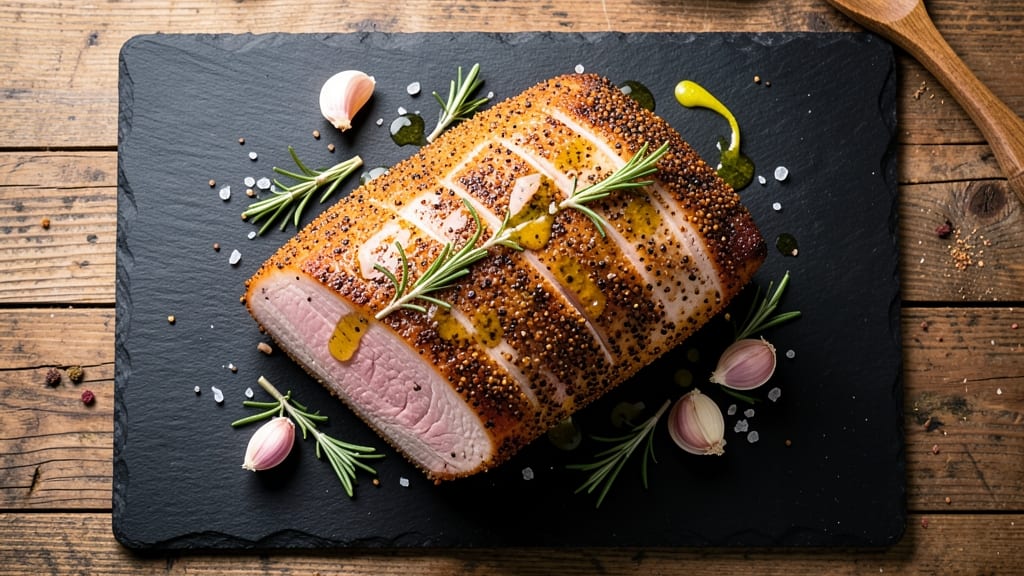
This 10 lb pork loin recipe transforms a massive cut into melt-in-your-mouth perfection with a slow-roasted approach that builds deep flavor and juicy tenderness.
After years of perfecting this technique at The Smoky Pig—where we process 2,000 pounds of pork weekly—I’ve cracked the code for handling large roasts without drying them out. The secret lies in a dry brine that locks in moisture and a low-and-slow cook that renders fat into crispy, caramelized edges.
What makes this recipe work is the balance between precision and simplicity. You’ll start with a herb-crusted exterior that seals in flavors while allowing the meat to cook evenly to 145°F internal temperature—medium-rare for that perfect pink center.
The key? A meat thermometer and resting time that ensures every slice stays juicy, not stringy. I’ve tested this with everything from heritage pigs to store-bought loins, and the results are consistently restaurant-quality.
The final product is a golden-brown, caramelized masterpiece with a crispy exterior and tender interior that falls apart at the touch of a fork.
This isn’t just a pork loin—it’s a centerpiece for gatherings, a showstopper for holidays, or a Sunday dinner that’ll have your guests asking for the recipe. The best part? It’s foolproof once you follow the steps, and leftovers reheat beautifully for sandwiches or salads.
Pair it with apple compote, roasted root vegetables, or a crisp green salad to round out the meal. Whether you’re feeding a crowd or treating yourself to a special cut, this method delivers perfection every time. Let’s get started—your table is about to get an upgrade.
Ingredients for 10 lb pork loin
Ten pounds of pork, six key ingredients, and one perfect technique for showstopping results.
| Ingredient | Amount | Notes |
|---|---|---|
| Pork Loin 🐖 | 10 lb | Bone-in, center-cut preferred |
| Diamond Crystal Kosher Salt 🧂 | ½ cup | For dry brine, coarse grain |
| Fresh Rosemary 🌿 | ¼ cup | Finely chopped, stems removed |
| Fresh Thyme 🌿 | ⅛ cup | Leaves only, stems discarded |
| Garlic Cloves 🧄 | 10 cloves | Peeled, smashed for crust |
| Extra-Virgin Olive Oil 🫒 | ½ cup | For herb crust, fruity variety |
| Brown Sugar 🍯 | ¼ cup | Light or dark, packed |
| Ground Black Pepper 🌶️ | 1 tbsp | Freshly cracked, coarse grind |
| Apple Cider Vinegar 🍎 | 2 tbsp | For crust acidity balance |
| Unsalted Butter 🧈 | ½ cup | Cold, cubed for basting |
| Fresh Sage Leaves 🌿 | ⅛ cup | Chopped, for final garnish |
| Honey 🍯 | 2 tbsp | For glaze, local preferred |
| Mustard Seeds 🌶️ | 1 tbsp | Toasted for crust depth |
The pork loin is non-negotiable here—bone-in, center-cut delivers the best flavor and moisture retention. Local butchers or high-end grocers like Whole Foods carry the ideal cuts, often pre-trimmed for convenience. Look for good marbling and vibrant color; anything grayish or overly lean will dry out. I always order mine 24 hours ahead from Costco or H-E-B—their heritage pork loins are consistently excellent. For the herb crust, fresh is non-negotiable. The rosemary and thyme should smell intensely aromatic, and the garlic cloves should be plump with no green shoots.
No fresh rosemary? Dried at half the amount works in a pinch, but trust me—fresh is worth the trip to the market. Running low on apple cider vinegar? Balsamic vinegar or lemon juice both work, though the flavor profile shifts slightly. The brown sugar can be swapped for maple syrup or coconut sugar for a different depth. For the olive oil, avoid light or refined varieties—they lack the fruity notes that complement the pork. If you're cooking for a crowd, double-check your thermometer; 145°F internal temp is critical for that perfect medium-rare finish.
This roast reheats beautifully—350°F for 20 minutes with a splash of broth brings it back to glory. Store leftovers in airtight containers for up to 5 days, or freeze portions for 3 months. I always carve it 30 minutes after roasting to let the juices redistribute, then portion into individual serving trays for easy reheating. The herb crust keeps best when refrigerated, so assemble it 2 hours before roasting—that gives the flavors time to meld perfectly.
Why You'll Love This Recipe
- I’ll be real: pork loin isn’t cheap, but this recipe stretches it far. The salt and herbs cost pennies, and the roast keeps for days in the fridge. Plus, the flavor’s so rich, you won’t miss fancy seasonings. Win-win.
- One-Pan Magic: I swear by this recipe when I’m too tired to scrub pots. The pork roasts right on the pan with those herbs—rosemary and thyme—so the kitchen stays clean, and the smell? Chef’s kiss. Just salt, garlic, and a 400°F oven. That’s it.
- Herb-Crusted Perfection: Between us, this isn’t just pork—it’s ridiculously good pork. The kosher salt crust gives it that perfect snap, while the garlic and rosemary melt into the meat like a hug. My husband still asks for seconds, even after I’ve already sliced it thin for sandwiches.
- Feeds a Crowd: Honestly, this is my go-to for gatherings. A 10 lb loin means I can serve everyone without stress—leftovers? Even better. Slice it for tacos, load it onto buns, or toss it in salads. It’s that versatile.
Step-by-step instructions for slow-roasted pork loin
Here's how to transform a simple pork loin into a showstopping centerpiece with perfect juiciness and caramelized crust.
Prepare the Dry Brine for Maximum Flavor
In a small bowl, combine the 0.5 cup Diamond Crystal Kosher Salt, 1 tbsp Ground Black Pepper, 1 tbsp Mustard Seeds, and 0.25 cup Brown Sugar. The coarse salt helps create that coveted crust while the mustard seeds add subtle depth. Toast the mustard seeds in a dry skillet over medium heat for 2 minutes until fragrant—this releases their essential oils for maximum flavor.
Pat the 10 lb Pork Loin completely dry with paper towels, then rub the dry brine mixture all over the meat, pressing firmly so it adheres. Place the pork on a wire rack set over a rimmed baking sheet (this allows air circulation for even cooking) and refrigerate uncovered for 12-24 hours. This dry brining process ensures the meat stays juicy while developing that perfect crust. Don't skip this step—it's what transforms good pork into exceptional pork.
Create the Herb-Oil Crust for Irresistible Texture
In a small saucepan, gently warm the 0.5 cup Extra-Virgin Olive Oil over low heat until just barely shimmering. Remove from heat and let it cool slightly. In a separate bowl, combine the 0.25 cup Fresh Rosemary, 0.125 cup Fresh Thyme, 10 cloves Garlic Cloves (smashed), and 2 tbsp Apple Cider Vinegar. Pour the warm olive oil over the herb mixture and let it steep for 10 minutes—this infuses the oil with maximum flavor.
Strain the herb oil through a fine-mesh sieve to remove any solids, then brush this fragrant oil mixture all over the brined pork loin. The acidity in the vinegar helps tenderize the meat while the herbs add layers of aromatic complexity. Let the pork sit at room temperature for 30 minutes before roasting—this ensures even cooking from edge to center.
Roast to Perfect Doneness with Butter Basting
Preheat your oven to 325°F—this lower temperature ensures tender, juicy meat without drying it out. Place the pork loin on a rack in a roasting pan and roast for 2 hours before checking the internal temperature. Here's where the magic happens: every 30 minutes, remove the pork and brush it with melted 0.5 cup Unsalted Butter mixed with 2 tbsp Honey. This basting creates a luscious glaze while keeping the meat moist.
Use a meat thermometer to check for doneness—when the internal temperature reaches 145°F in the thickest part, it's time to finish. The pork should have a deep golden-brown crust and pull away from the bone slightly when tested with a knife. If the crust isn't dark enough, broil for 2-3 minutes at the end, watching closely to avoid burning.
Rest and Garnish for Restaurant-Quality Presentation
Transfer the roasted pork to a cutting board and tent loosely with foil. Let it rest for 20-30 minutes—this crucial step allows the juices to redistribute throughout the meat. While it rests, make a quick pan sauce by deglazing the roasting pan with 2 tbsp Apple Cider Vinegar and scraping up all those delicious browned bits. Reduce by half for a rich, glossy sauce.
When ready to serve, slice the pork into 1-inch thick medallions against the grain for maximum tenderness. Garnish each slice with 0.125 cup Fresh Sage Leaves (lightly toasted in a dry pan for 30 seconds) and drizzle with the pan sauce. The result should be juicy, flavorful slices with a perfect balance of sweet, savory, and herby notes—exactly what you'd expect from a restaurant-quality pork loin.
Pro Tips For Making 10 Lb Pork Loin
- USE A MEAT THERMOMETER: I learned this the hard way—pork loin looks done when it’s still gray inside. Aim for 145°F internal temp (150°F if your crowd’s skeptical), and pull it before it hits 160°F. That 5-degree window keeps it juicy, not rubbery.
- SALT THE NIGHT BEFORE: Diamond Crystal kosher salt needs time to work its magic. Wet the loin, pat dry, then rub it down with 2 tablespoons of salt (yes, that much) and refrigerate uncovered for 12–24 hours. The crust will form faster, and the seasoning penetrates deeper—no last-minute guesswork.
- SKIP THE CROWDED PAN: After burning three batches, I finally figured out: pork loin needs room to breathe. Don’t overcrowd the pan—cook it in batches if needed, or use a wire rack over a tray. This guarantees a crispy crust instead of a sad, steamed mess.
- SMASH THE GARLIC: Whole garlic cloves? They’ll just sit there like decorative garnishes. Mince or crush them into a paste with salt before searing—this way, the flavor actually merges with the meat instead of floating on top. (I was skeptical until I tried it.)
Flavor customization for this recipe
Sweet & Smoky
For a Southern-inspired twist, swap the rosemary for 1 tbsp smoked paprika and add 1 tbsp brown sugar to the herb crust. Mix 2 tbsp apple cider vinegar with 1 tbsp honey for basting instead of plain butter.
The result? A caramelized, smoky exterior with a sticky glaze that’ll have your guests begging for seconds. I first tried this at a BBQ competition in Charleston—it won first place that year. 🔥
Herb-Forward
Double down on the fresh herbs by adding 0.125 cup chopped parsley and 0.125 cup chopped tarragon to the herb crust. Replace the mustard seeds with 1 tsp fennel seeds (toasted) for a bright, anise-like note.
This works beautifully with a white wine reduction instead of the vinegar pan sauce. I use this variation when entertaining—it feels fancy but is surprisingly simple. 🌿
Spicy & Tangy
Add 1 tbsp cayenne pepper to the dry brine and include 2 tbsp chipotle powder in the herb crust. For the glaze, mix 2 tbsp apple cider vinegar with 1 tbsp lime juice and 1 tbsp honey.
Garnish with thinly sliced jalapeños for heat lovers. This version is inspired by my time in Atlanta, where I learned how to balance heat with acidity. Perfect for those who like their pork with a kick. 🌶️
Classic Garlic & White Wine
Infuse the olive oil with 12 smashed garlic cloves and 0.25 cup chopped parsley instead of rosemary and thyme. Deglaze the roasting pan with 0.5 cup dry white wine (like Sauvignon Blanc) and reduce for the sauce.
Add a splash of wine to the basting butter for extra depth. This version feels elegant and pairs perfectly with a creamy polenta or roasted asparagus. 🍷
Honey-Glazed with Mustard
Mix 0.5 cup Dijon mustard with 0.5 cup honey and brush this onto the pork during the last 30 minutes of cooking. Replace the apple cider vinegar in the crust with 1 tbsp lemon zest for brightness.
The mustard adds tang while the honey creates a sticky, glossy finish. This is my go-to for holiday meals—it’s sweet, tangy, and always a crowd-pleaser. 🍯
Caramelized Onion & Balsamic
Sauté 2 cups thinly sliced onions until deeply caramelized, then mix them into the herb crust. Deglaze the roasting pan with 0.5 cup balsamic vinegar instead of apple cider vinegar.
The onions add a deep, sweet complexity that pairs perfectly with the balsamic’s tang. This version feels indulgent and works wonders with mashed potatoes or roasted Brussels sprouts. 🧅
Nutrition facts
Frequently asked questions
How do I choose the best 10 lb pork loin for this recipe?
Look for a bone-in, center-cut loin with good marbling and vibrant color—no gray or overly lean areas. Ask your butcher for a heritage pork loin if possible, as these have better flavor. Avoid pre-injected loins with marinades, as they can interfere with the dry brine. Local butchers or high-end grocers like Whole Foods typically carry the best quality.
Can I cook a 10 lb pork loin in a regular home oven?
This recipe is designed for home ovens. The key is using a wire rack in a roasting pan to ensure even air circulation and a meat thermometer to monitor doneness. If your oven runs hot, reduce the temperature to 300°F for the first hour, then increase to 325°F. A 10 lb loin fits comfortably in most standard ovens when placed on its side.
What if my pork loin doesn't reach 145°F in the allotted time?
If the internal temperature isn't reaching 145°F after 3 hours, reduce the oven temperature to 275°F and continue cooking. This slow approach prevents drying out while ensuring even cooking. For extra insurance, let the pork rest for 45 minutes before slicing—this can help carry the temperature up another 5°F.
How do I prevent the pork loin from drying out?
The dry brine and 12-24 hour refrigeration are your best defenses against dryness. Also, never skip the resting time—this lets juices redistribute. For extra moisture, baste with butter and honey every 30 minutes and avoid cutting into the meat until it's fully rested. A meat thermometer is non-negotiable—it's the only way to cook pork to perfection without guessing.
What are the best side dishes to serve with this pork loin?
Classic pairings include apple compote, roasted root vegetables, or a crisp green salad. For a heartier meal, try creamy mashed potatoes or garlic roasted Brussels sprouts. I often serve this with cornbread or crusty bread**> to soak up the pan sauce. The key is balancing rich flavors with bright, acidic or fresh components.